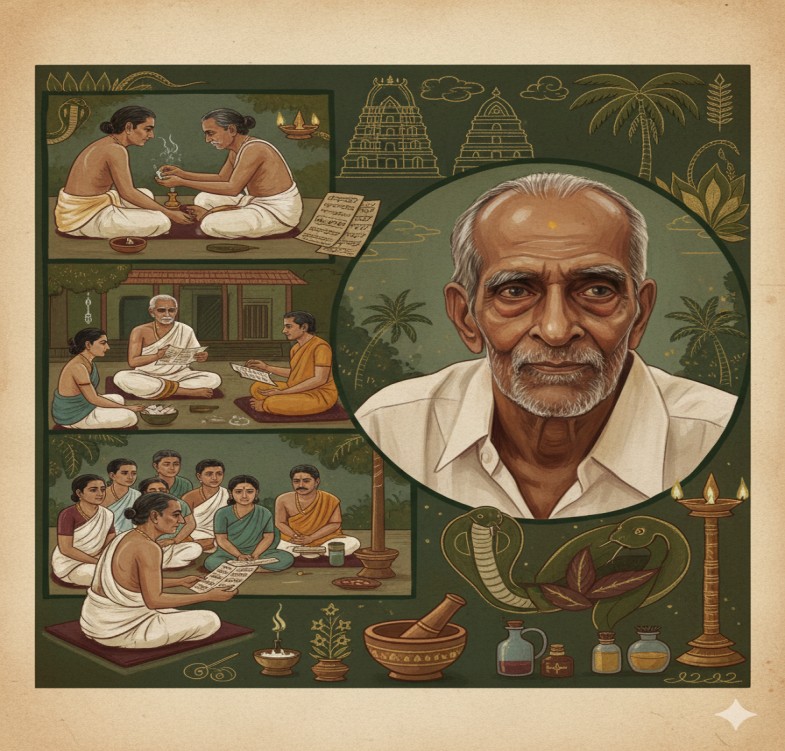

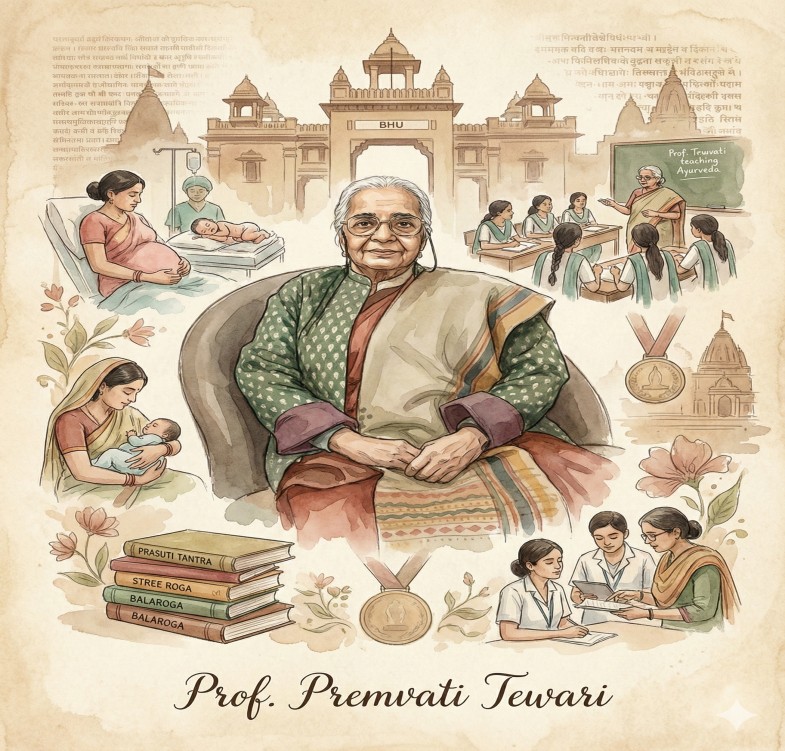

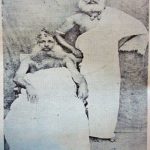
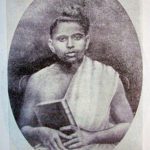
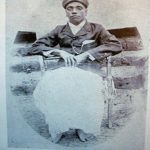
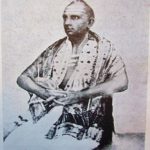
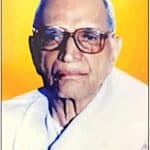
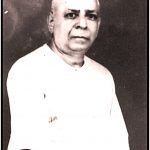
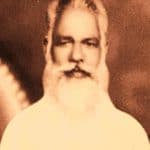
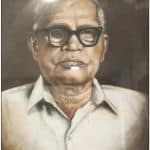
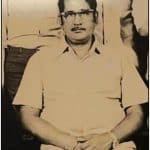
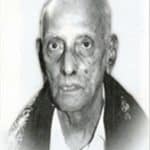
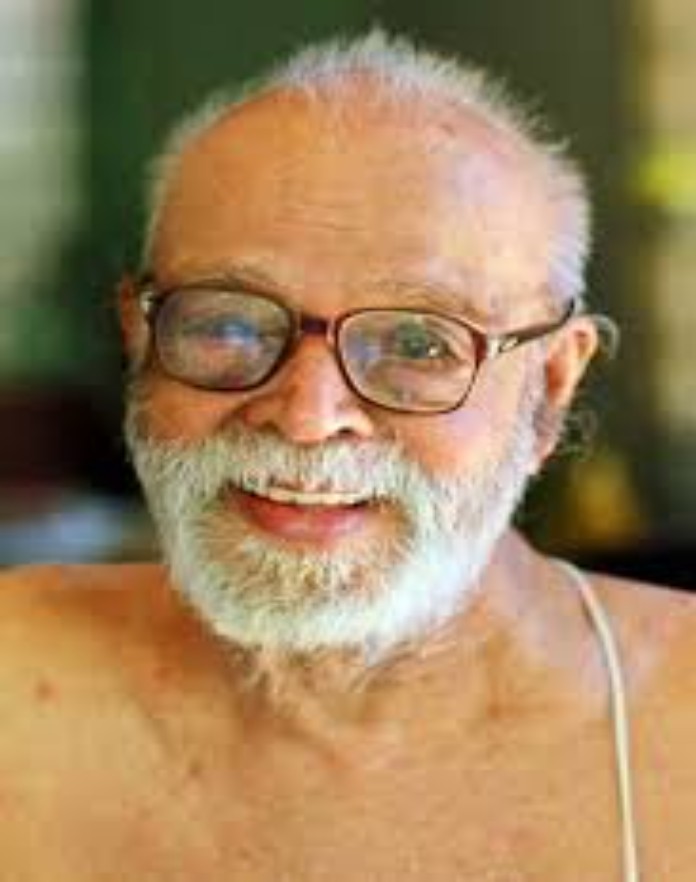
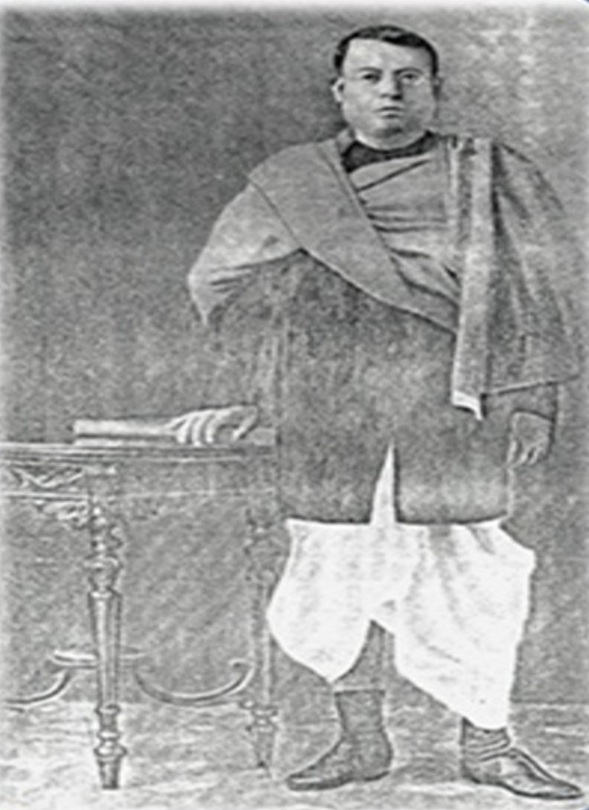
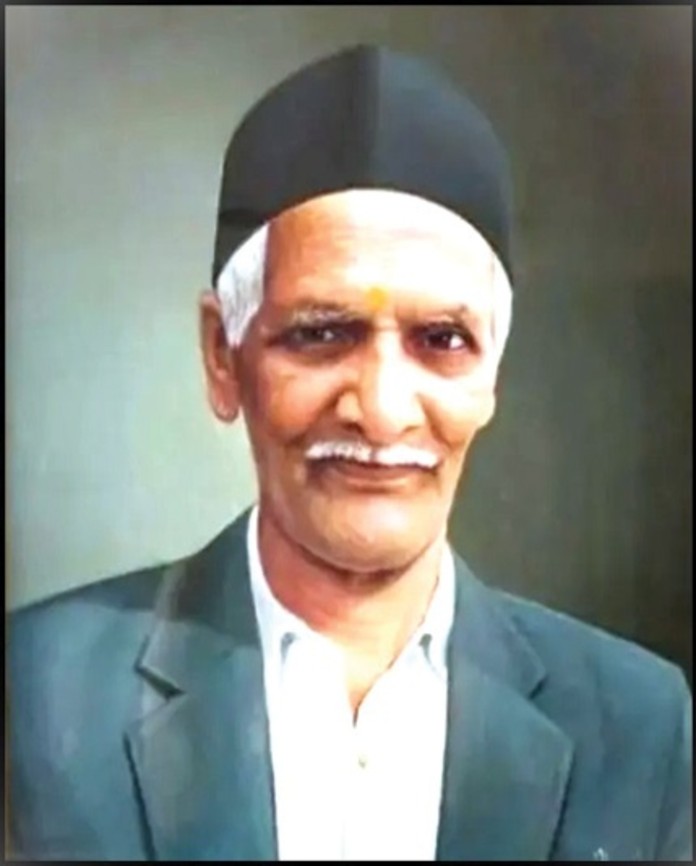
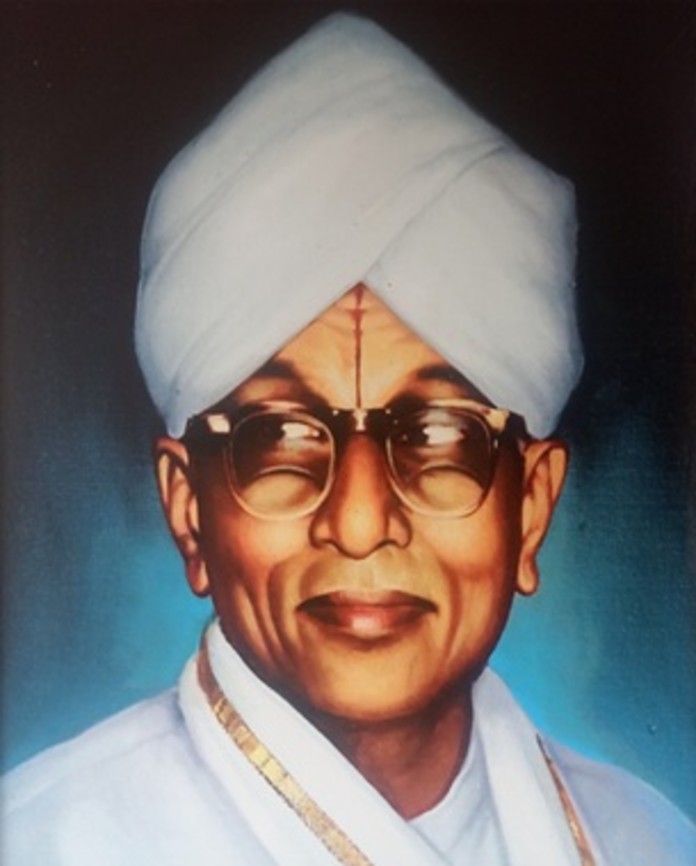
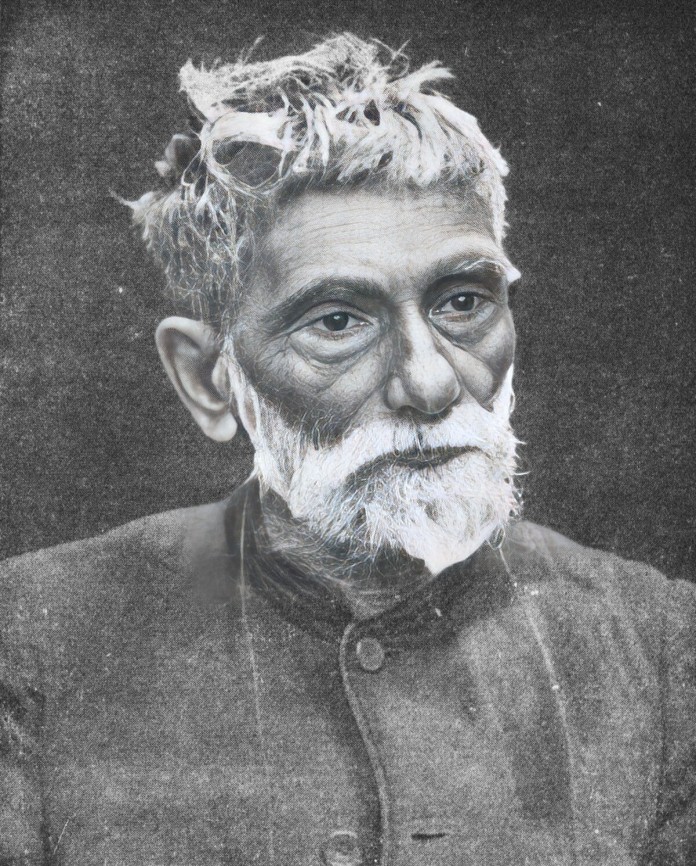
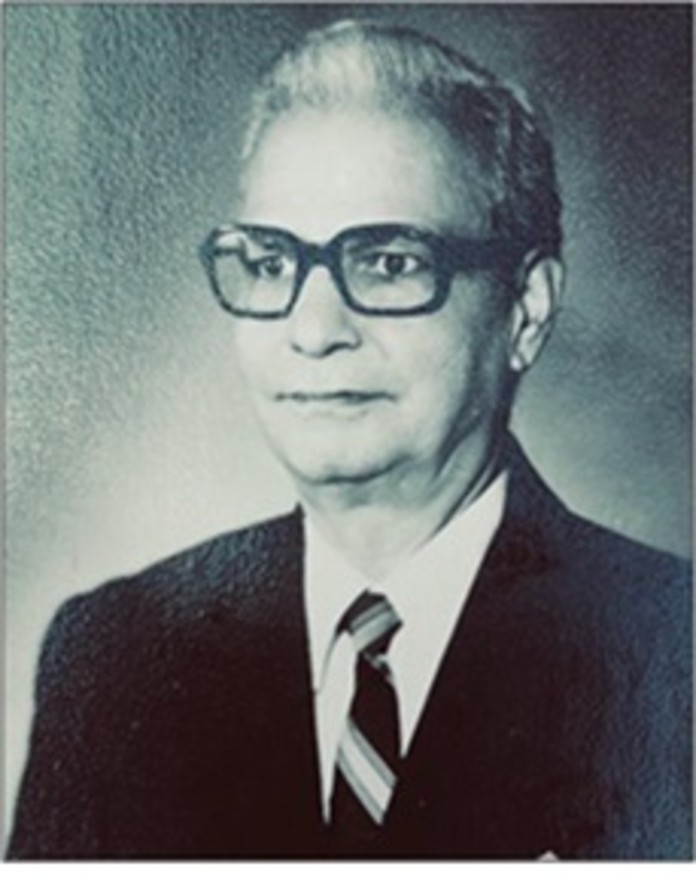
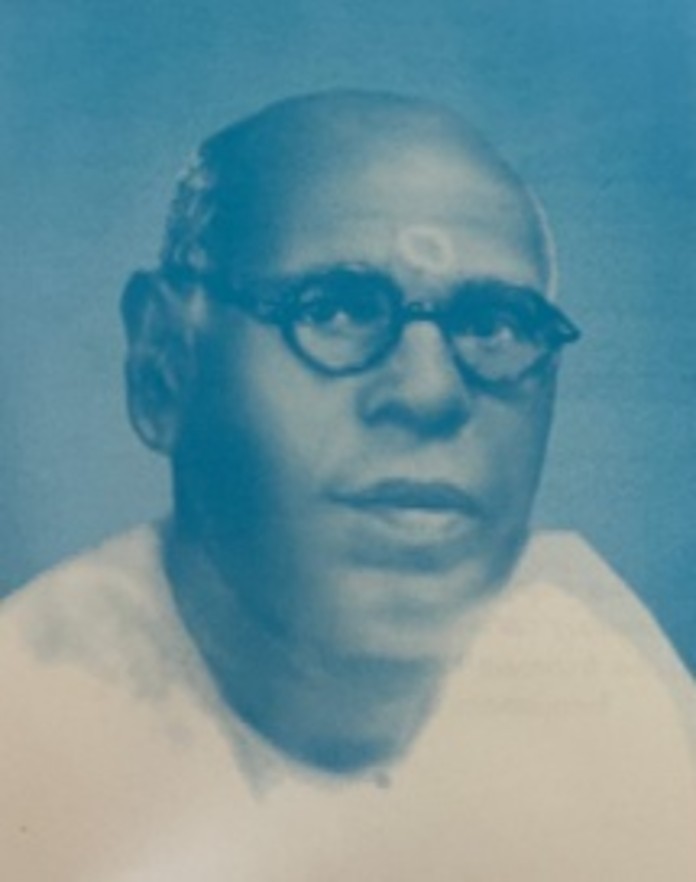
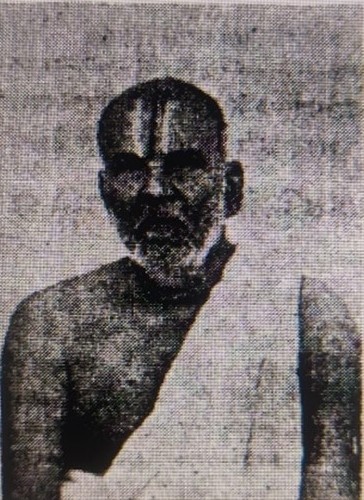
Pandit Srinivasa Narayana Iyengar
Date of Birth:- October 25th, 1883
Place of Birth:- Naravalur village near Namakkal, Tamilnadu.
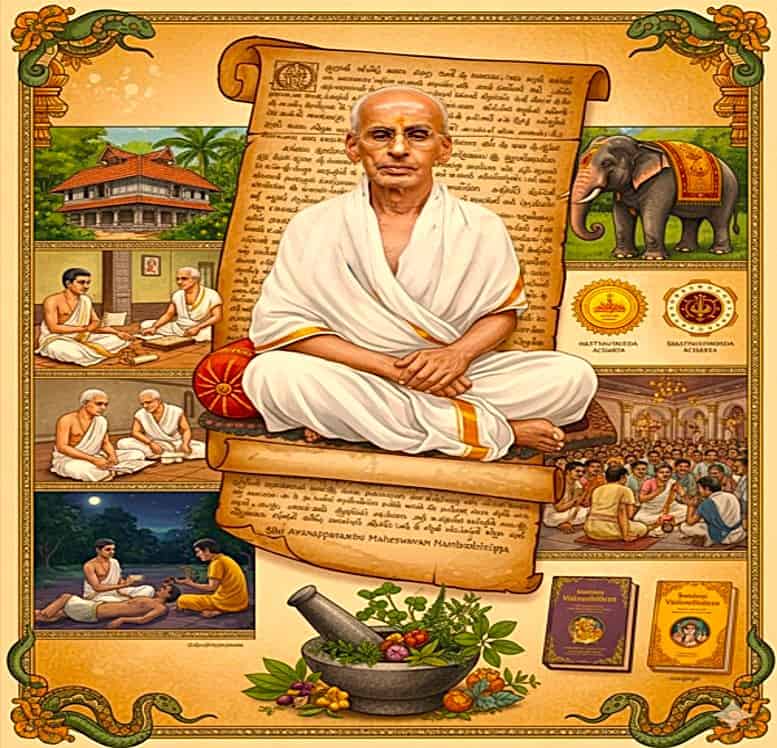
Details of family:-Pandit Srinivasa Narayana Iyengar, born on October 25, 1883, in Naravalur, Tamil Nadu, came from a prestigious family of Samvedadhyayis. His father, Pandit Srinivasacharyar, was a renowned scholar in Vedanta, Tarka Sasthra, Vyakarana, Upanishads, and Vaidyasasthra, earning him the title of ‘Vidwan Swami Iyengar.’ His mother, Lakshmiammal, was the daughter of Sridesikan, a philosopher from Nerur, where the family later settled. Srinivasa Narayana Iyengar, fondly called ‘Rajan,’ was the eldest of four siblings. He married Lakshmiammal at the age of thirteen.
Educational Qualifications:-
Pandit Srinivasa Narayana Iyengar received his upanayana at age eight and studied Sanskrit, Nyaya Sasthra, and Visishtadvaitha under his father. At sixteen, driven by his passion for Sanskrit, he travelled to Kashi on foot, where he studied under renowned scholars, gaining expertise in Sabarabhashyam, Advaithabhashyam, and Ayurveda. After two years in Kashi, he returned to Nerur to continue his education with his father before returning to Kashi later for further Ayurvedic studies. He briefly worked for Swadeshamithran, the first Tamil newspaper, in Chennai and initiated several businesses, which were discontinued.
Professional Trajectory:-
As a physician and manufacturer:- Pandit. S. Narayana Iyengar settled in Madurai and started practicing Ayurveda in 1908, where he continued till 1954. He initiated a Charitable dispensary in Ayurveda called Meenakshi Dharma Vaidyasala to benefit the region’s people. He treated poor patients and was keen on distributing medicines to poor patients free of cost. He worked tirelessly and distributed medicines, especially during epidemics such as Cholera and the Plague. To address the scarcity of raw drugs for preparing medicines, he developed a raw drug store in Madurai. Good quality materials were made available to physicians at reasonable and affordable rates. He also initiated a pharmacy where he manufactured medicines like Kshayanthaka Rasa, Kushtakulanthakam, Rithusoolanivarini etc, which were made available for physicians to purchase. He also delivered his medicines to far-off Ayurvedic dispensaries, hospitals and physicians through post.
As Editor of Magazine Vaidyachandrika:- Pandit. S. Narayana Iyengar worked with other physicians to develop a scientific approach to all aspects of Ayurveda. They identified that as most Ayurvedic books were in the Sanskrit language, Tamil physicians could not gain knowledge from them, and there was a dire need to address the situation. With the vision of generating and sharing knowledge, Pandit Srinivasa Narayana Iyengar started a monthly Ayurvedic medical Journal in Tamil called Vaidya Chandrika in June 1925. The periodical was discontinued in August 1927 due to the financial crisis. It was restarted in December 1938 with 25 pages, which was restricted to 20 pages in the later issues due to compulsions imposed by the government. He continued in the post of the publisher and chief editor till 1945. From January 1946 onwards, the journal was taken over by Tamil Nadu Ayurveda Mahamandalam. In order to include articles in Sanskrit and English, the printing of the journal was shifted from the press in Madurai to Srirangam.The journal was used as a platform for discussions, sharing important information and news pertaining to Ayurveda and for publishing articles written by Ayurvedic physicians from all parts of the country. He published the activities of local, regional and national associations in his journal. Pandit Srinivasa Narayana Iyengar himself contributed several articles to the journal.
Literary works and publications:- Pandit S. Narayana Iyengar translated key Ayurvedic texts like Sahasrayogam, Yogaratnakaram, and Bopadevasatakam into Tamil, making them accessible to Tamil physicians. He wrote commentaries on classical Ayurvedic texts under the title Ayurveda Vadavali. Through his journal Vaidya Chandrika, he published series such as Vaidyasaram on disease management and Oushadhasaram on medicinal formulations, which he later compiled into a book in 1938. He also published works on Ayurvedic rejuvenation (Kayakalpam), tuberculosis management (Kshayanoyum Chikitsayum), and purification of metals (Sidharmurai). His public health magazine Arogyachandrika promoted Ayurvedic principles in simple language to the public.
Contributions towards Ayurveda education and practice in Tamilnadu:- In colonial India, Pandit S. Narayana Iyengar played a key role in revitalizing indigenous medicine and opposing Western medical dominance. He strongly defended Ayurveda against criticism from Western practitioners, especially targeting Dr. Koman’s report on Indian medicine. Through Vaidya Chandrika and public platforms, Iyengar propagated Ayurveda’s superiority and pressed for amendments to the 1914 Medical Registration Act. He also worked to unite Ayurveda and Siddha, asserting that they shared common roots. Additionally, he advocated for an integrative medical system combining Ayurveda, Allopathy, Homeopathy, and Bio-Chemistry. He supported institutions like Chennai Swadesha Vaidya Padasala, promoting Ayurvedic education and research.
Social Engagements:- Pandit S. Narayana Iyengar was deeply involved in promoting Ayurveda through various associations, including the All India Ayurveda Mahamandal, Dravida Vaidya Mandal, Madras Ayurveda Sabha, and Trichy Ayurveda Mahamandal. He founded the Swadesha Vaidya Sangam in Madurai, serving as its president until his death. Twice elected president of the Dravida Vaidya Mandal (1923–1941), he led annual meetings and facilitated its evolution into the Tamil Nadu Ayurveda Mahamandal. The association promoted Ayurveda through public lectures, exhibitions, and Dhanwantari Pooja celebrations. Iyengar also led scientific discussions at Sambhasha Parishads and presided over the Darsanika Parishad at the 39th All India Ayurvedic Congress.
Principles and Ethos:- Pandit Srinivasa Narayana Iyengar firmly believed in the supremacy of Ayurveda over the Western medical system in diagnostic and therapeutic methods but realized that the Ayurvedic medicine system was in dire need of two essential actions for its revival. One was the development of scientific thinking and observation among physicians, which has to be developed through scientific discussions, and the other most crucial action to be taken was spreading awareness among the public regarding the benefits of Ayurveda. He was keenly interested in developing an integrated treatment approach and propagated the exchange of knowledge between different streams of medicine.
Full Paper Link