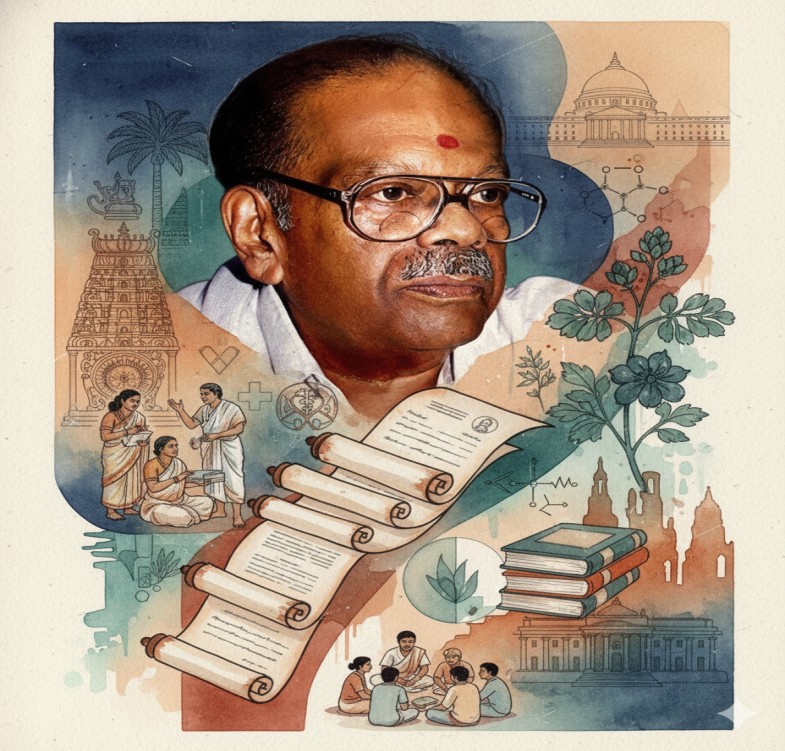
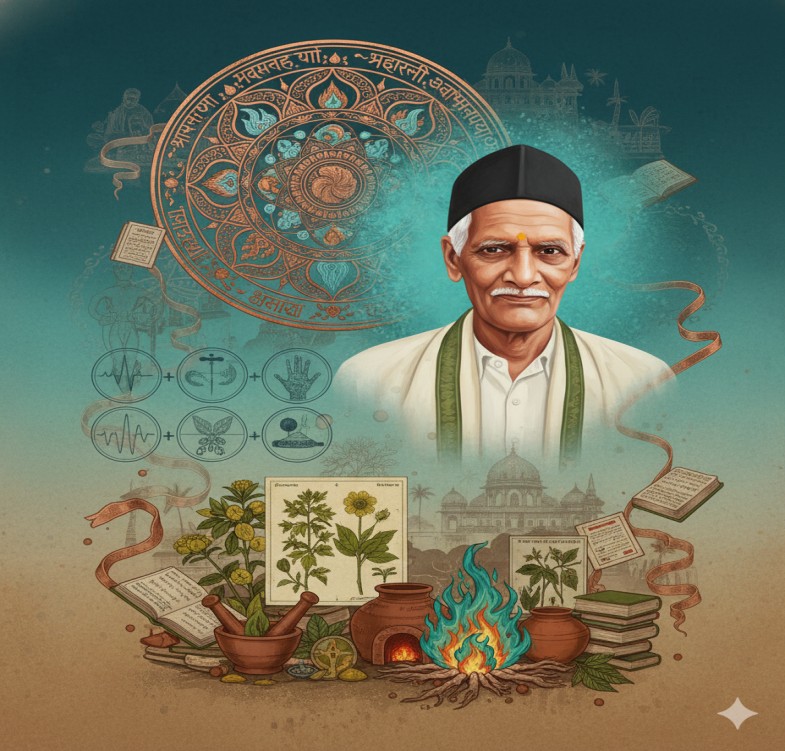
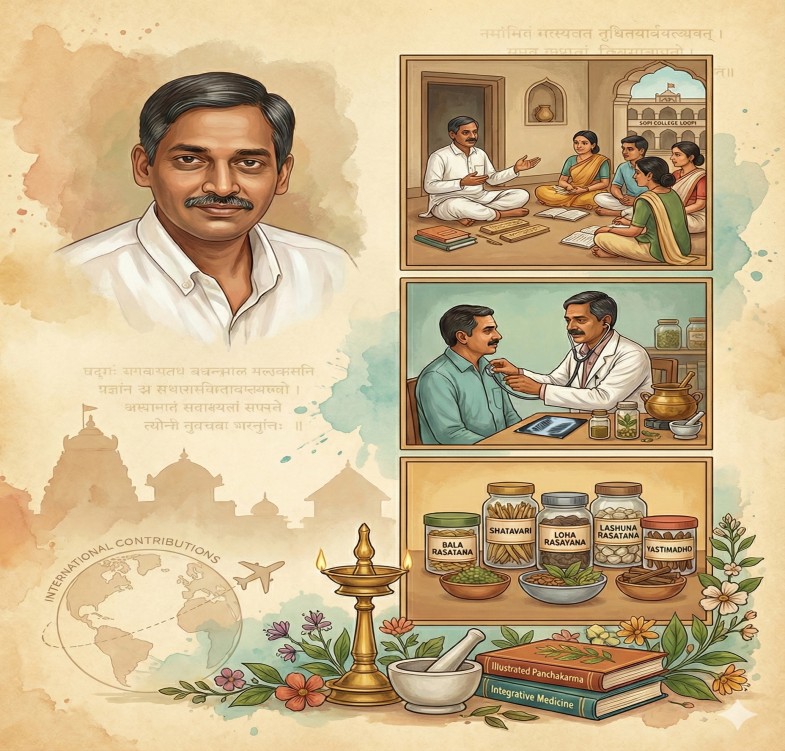
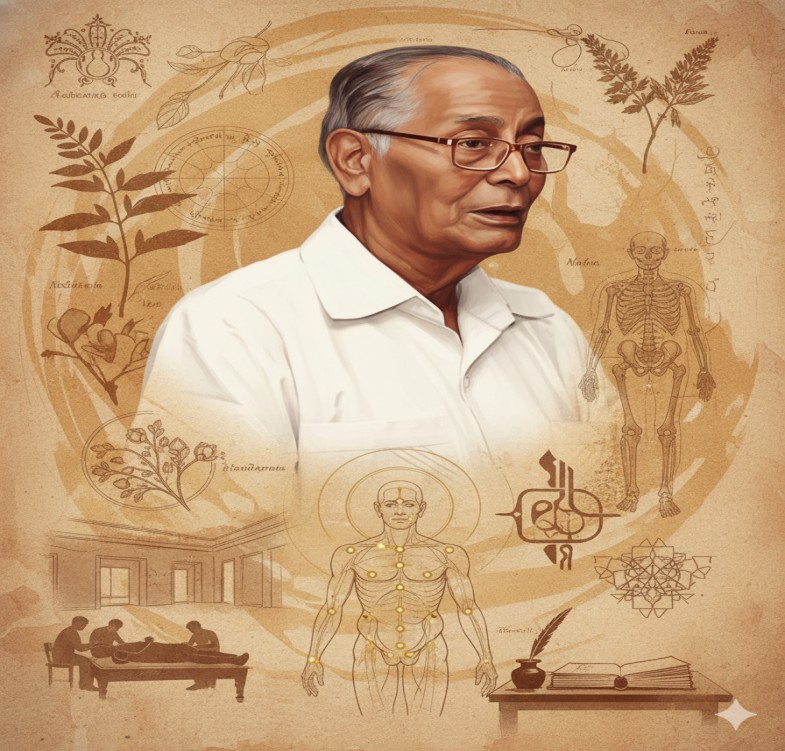
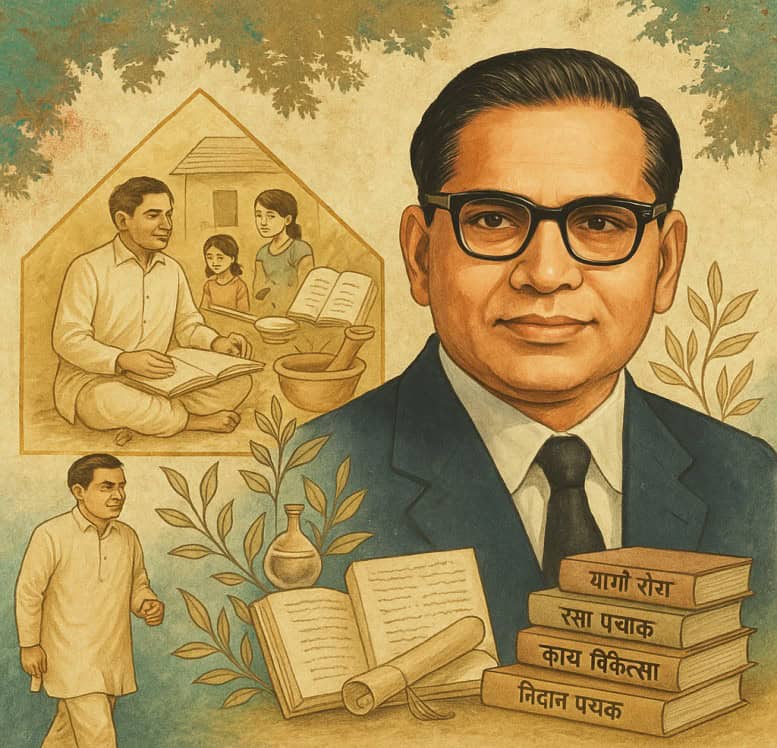
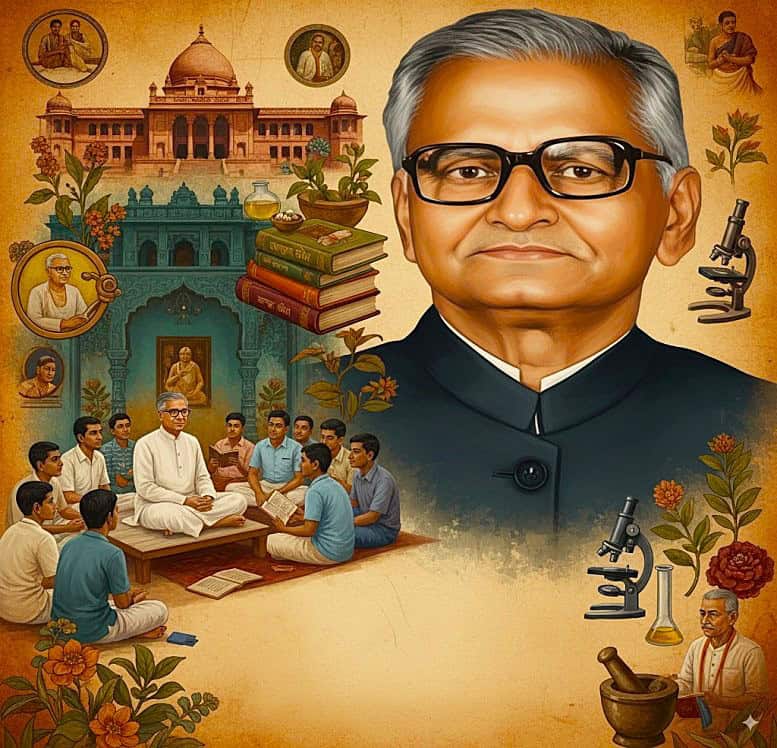
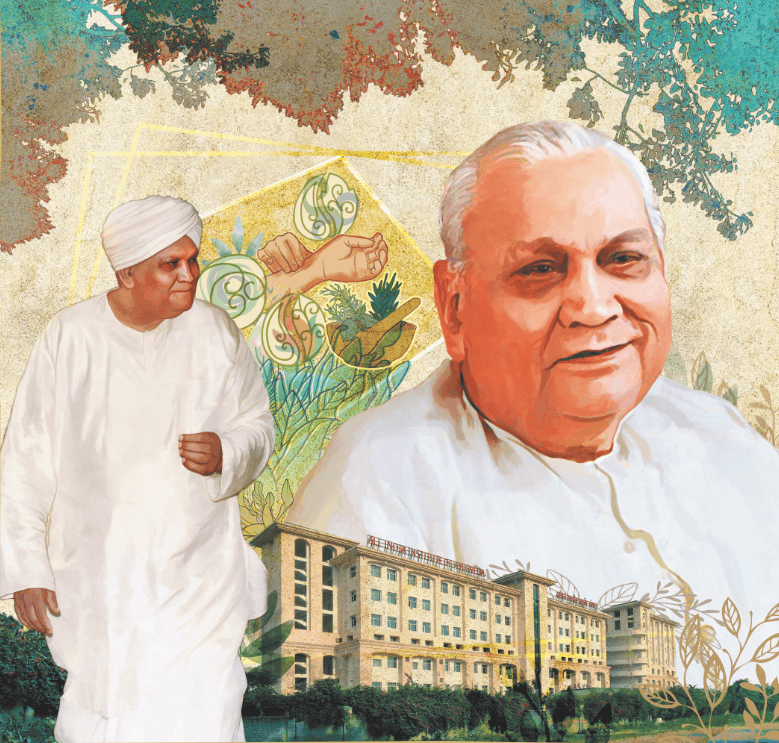

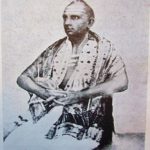
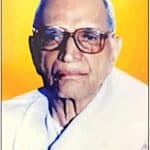
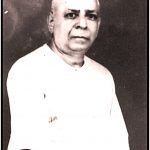
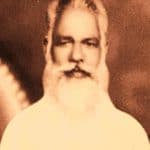
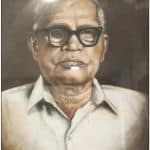
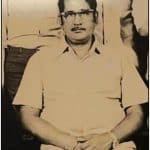
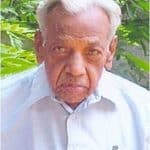
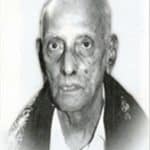
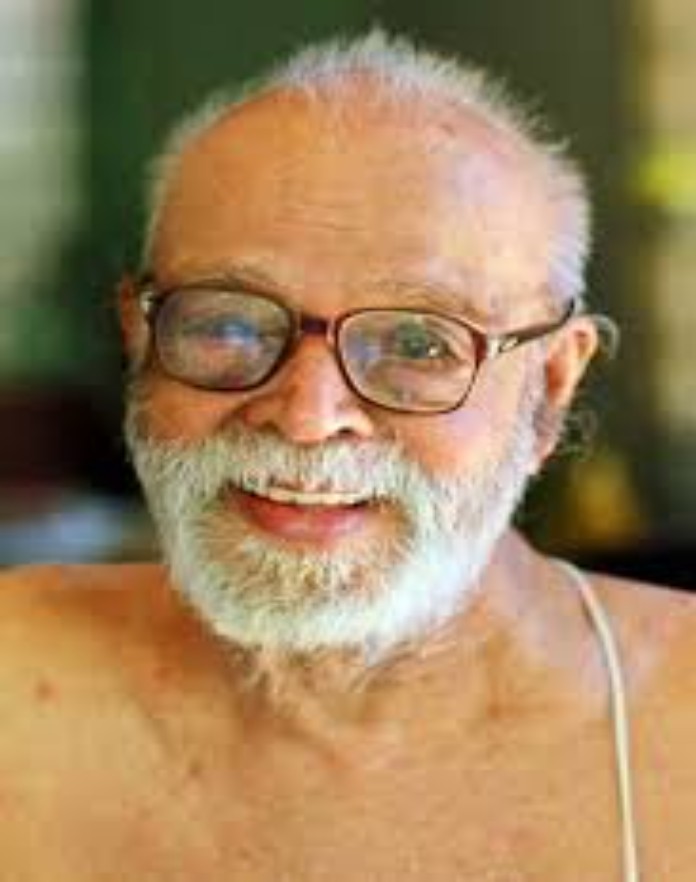
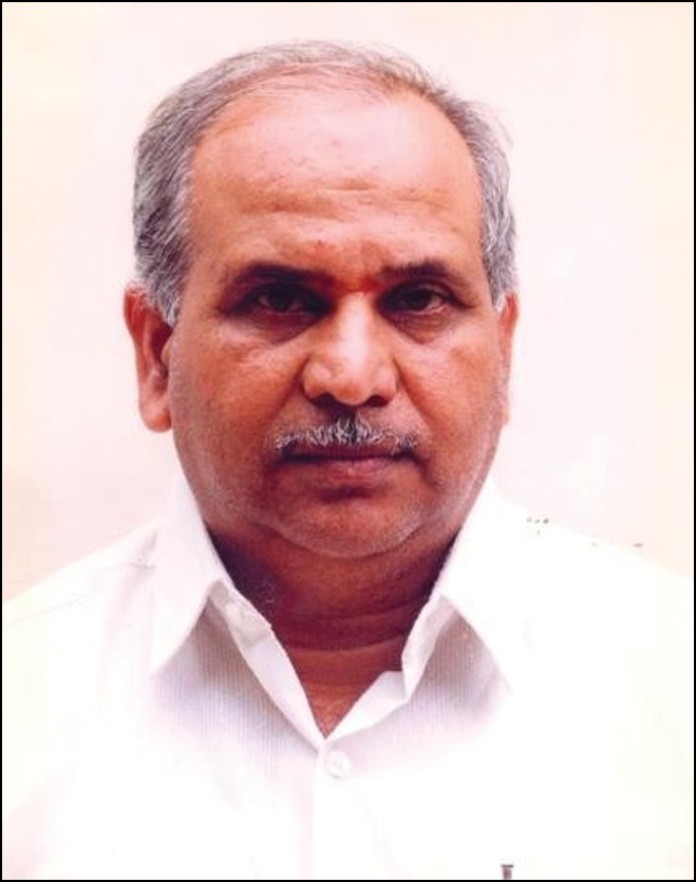
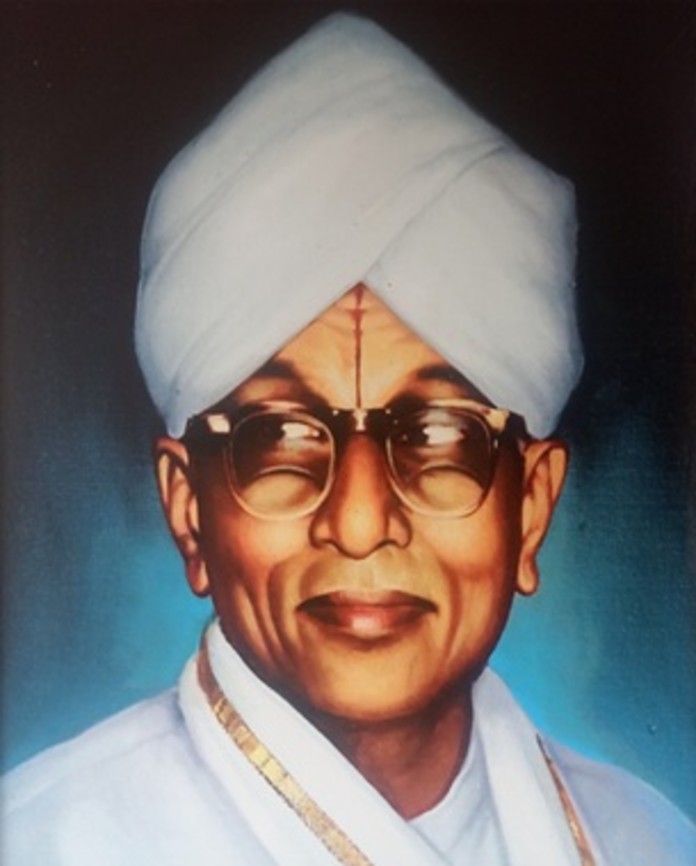
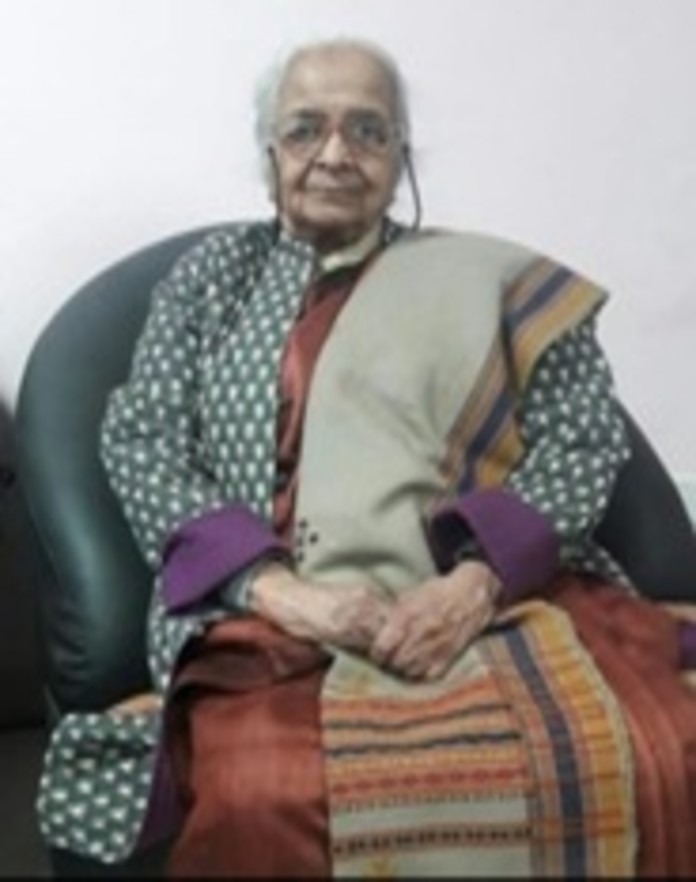
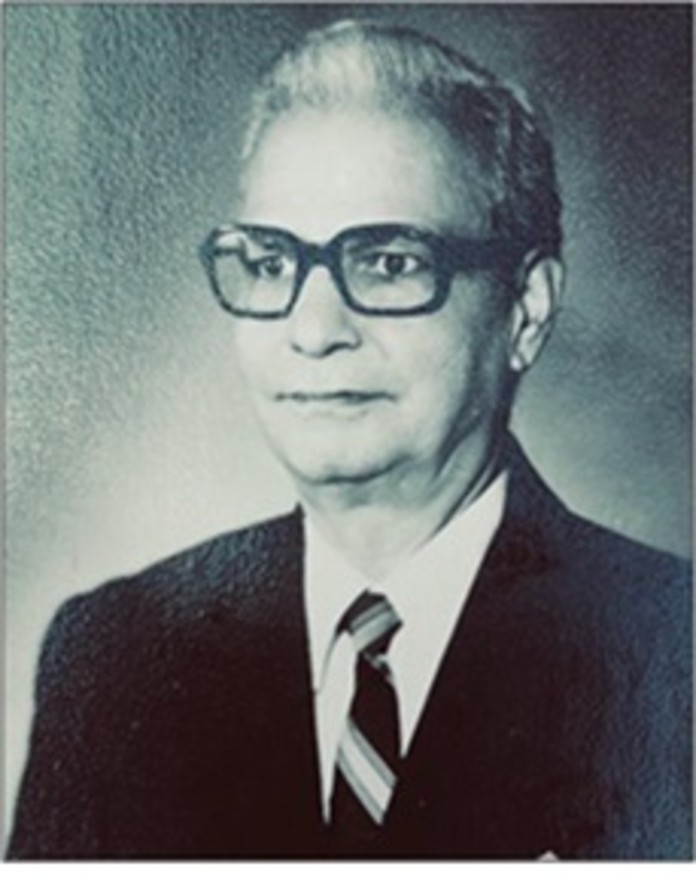
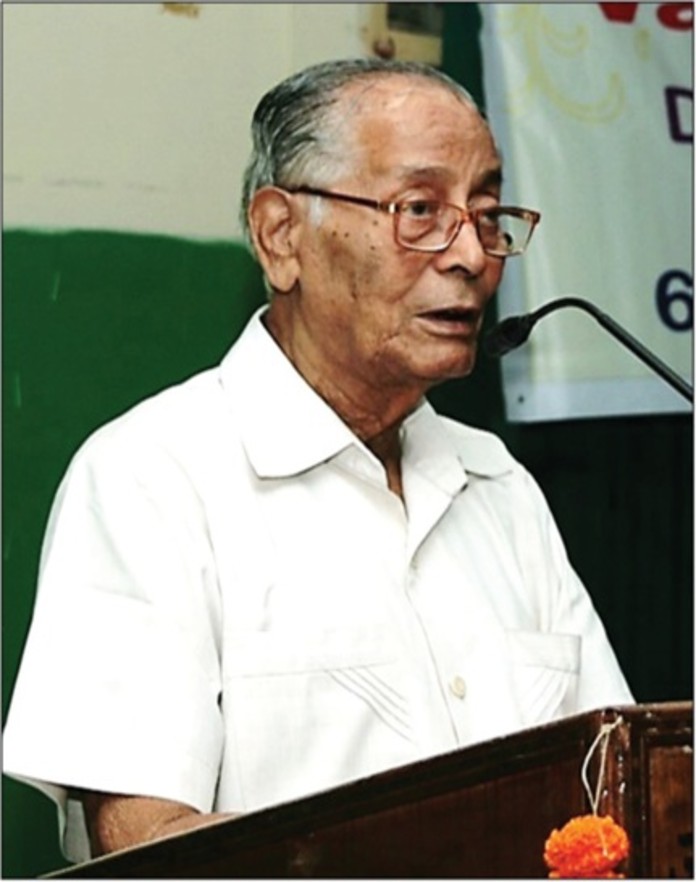
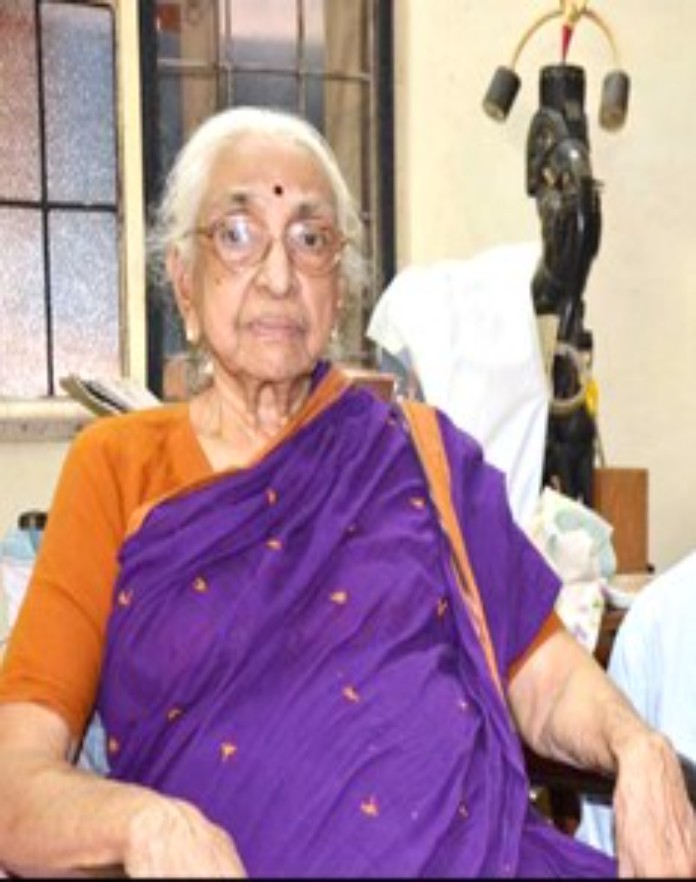
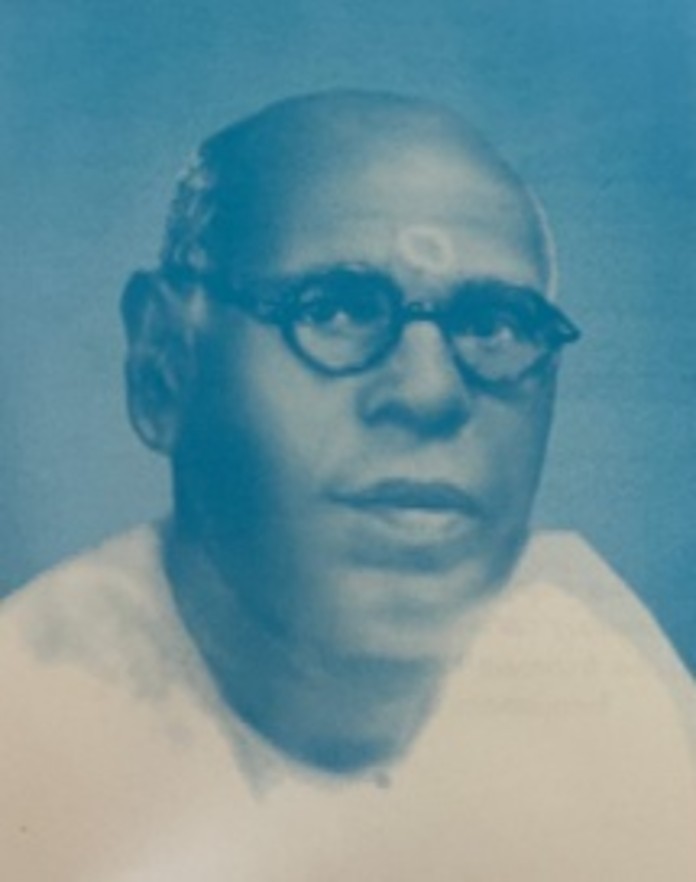
Acharya Priyavrata Sharma
Date of Birth:- November 1, 1920
Place of Birth:- Village Mustafapur, near Khagaul, District: Patna, Bihar.
Details of family:- He was the fifth child among six children of his parents: his father, Pandit Ramavatar Misra, Vaidya Bhushan, was an Ayurveda physician who founded a regional association of physicians of Bihar named Bihar Prantiya Vaidyasammelana (BPV). Young PV developed compassion and affection toward people experiencing poverty from the charitable work of his father, who was known for his philanthropy. He was inspired by his father to study Ayurveda and devote his service to the upliftment of society. His mother, Srimati Prema Dulari Devi, was a pious and kind-hearted woman. His elder brother Pandit Satyavrata Sharma, besides being a famous poet and writer, was a director in the State Language Department, Government of Bihar. He was a Sanskrit scholar, translator, and formerly Head of the Sanskrit Department, Bhagalpur, Bihar. PV Sharma was greatly influenced and inspired by his elder brother, whom he considered his first teacher. He acquired an interest in literature and writing skills from him. He married Shrimati Padmavati Sharma in 1936; she inspired him with her complete devotion, care, and true companionship till her last breath on December 23, 2001, and they had 10 children.
Educational Qualifications:-
His passion for writing was apparent from an early age. In school days, along with his classmates, he had started a handwritten annual magazine distributed freely in the villages. He took up poetry writing in Hindi during his school days, and his collection, Madhuduti, was published in 1938. He actively engaged in the BPV with his father starting at the age of 7 years, which helped to mold his leadership abilities and provided further direction to his Ayurvedic education.
He received his primary schooling till 12th standard at Vedratna Vidyalaya, Mustafapur, Bihar, which was established as a Gurukul system in the memory of his paternal uncle Pandit Jagannath Sharma. His parents constantly persuaded and encouraged him to study Ayurveda at Kashi, and he obtained the Ayurveda with Medicine and Surgery (AMS) degree from Kashi Hindu Vishwavidyalaya in 1940. Early in his life, he understood the importance of the Sanskrit language in understanding the literature and principles of Ayurveda. To master the language, he obtained a Master of Arts (MA) in Sanskrit in 1948 from Banaras Hindu University (BHU), Sahityacharya in 1949 from Bihar Sahitya Academy, and an MA (Hindi) in 1950 from Patna University, which helped him to get proficient in Ayurveda. He also learned the Bangla language to learn from certain Bengali manuscripts.
Pandit Satyanarayan Shastri (a former principal of the Ayurveda college of BHU, who wrote an introduction to Charaka Samhita, published in 1962) and Shri Rajeshwar Datt Shastri, his teachers at BHU, greatly inspired him to contribute significantly to the system. His approach and work were in tune with the vision of Mahamana Madan Mohan Malaviya, the founder of BHU.
Professional Trajector:-
He started his career as an Ayurveda practitioner soon after graduating (AMS) in 1940. He practiced Ayurveda in Khagaul, Patna, for 6 years. Later, in 1946, he joined as a lecturer to teach Rachana Sharira (anatomy) and Kriya Sharira (physiology) at Siva Kumara Ayurvedic College Begusarai, Bihar. In 1953, Prof. Sharma joined BHU as a lecturer at Dravyaguna Vigyan (pharmacology and materia medica). He also served as a principal in Government Ayurvedic College, Patna, from 1956 to 1960. Subsequently, Prof. Sharma served the Bihar State Government as Deputy Director of Health (Indian System) for 3 years and rejoined as a professor in 1963 at BHU when the Post Graduate Institute of Indian Medicine (PGIIM) was started at BHU.
His dedication to academia and research was so strong that he declined the position of Vice Chancellor offered by the Governor of Bihar. At PGIIM, BHU, he served as both the Director and Dean of the Faculty of Ayurveda from 1978 to 1980. During his tenure at PGIIM, he supervised 16 Doctor of Medicine and 14 Doctor of Philosophy (Ayurveda) studies. After his retirement in 1980, he served as the Director at the Center of History of Medicine, Asiatic Society Calcutta, in 1985. He had also trained students under the “Guru Shishya Parampara Programme” of Rashtriya Ayurved Vidyapeeth, New Delhi, for 2 years.
Under his guidance, the Department of Dravyaguna was established in 1978 at the BHU. Through his supervision, the department flourished and perfected. Under his leadership and due to his enormous effort, undergraduate courses started in 1999 at the BHU. He was a member of the Central Council of Indian Medicine, New Delhi, for a few years, and under his leadership, the postgraduate syllabus was finalized.
Achievements:-
Acharya Priyavrata (PV) Sharma, who has shaped the postgraduate specialty of “Dravyaguna” in the curriculum of Ayurveda, felt the need to describe the essence of these treatises with simple translations and other illustrations. Recognizing the challenges of contemporary learners of Ayurveda, Acharya PV Sharma translated many such books and authored many others that illustrate the fundamentals of Ayurveda. It needs great diligence and persistence to collect all the relevant materials scattered in various original books written over the last 2000 years. These efforts earned him the title of “Walking Encyclopedia,” and his life truly personified the term “Apta” (absolute authority) in the modern era. His intense passion were focused on the principles of Dravyaguna, history related to Dravya (substance), Dravyaguna samagri (materials of pharmacology), and Naamrupagyan (characterization of medicinal plants). He was keenly interested in Ashtanga Sangraha, and he encouraged the postgraduate students to read it thoroughly as it contains the fundamental concepts of Charaka Samhita and Sushruta Samhita. During his tenure at BHU, he wrote various textbooks on Dravyaguna. He continued to publish his works even during the last years of his life. He wrote and translated scores of Ayurveda texts; the majority were taken up after his retirement, including the English translation of Charaka Samhita in four volumes and Sushruta Samhita in three volumes. Under his supervision, various research works were conducted not only to explore the quality and efficacy of herbs such as Amalaki (Emblica officinalis), Guduchi (Tinospora cordifolia), Shyonaka (Oroxylum indicum), Rasna (Pluchea lanceolata), Murva (Marsdenia tenacissima), Aralu (Ailanthus excelsa), Krimighna (anthelmintics), Pravahikahara (antidysenteric), and contraceptive Dravya (substances), but he also worked to elaborate pharmacognostical, chemical, and pharmacological study of Indian medicinal plants, conducting many clinical, pharmaceutical, and experimental studies. He also standardized mineral preparations such as Tamra (copper) and Abharak (mica) Bhasma. He supervised the thesis on the hypoglycaemic effect of the bark of Bijaka (Pterocarpus marsupium) and Clerodendron infortunatum study on the anticancer activity of Bhallataka (Semecarpus anacardium). The effect of Bhallataka on liver function, the effect of copper on hematological disorders, the efficacy of Dugdhika (Euphorbia thymifolia) in bronchial asthma, efficacy of Madhuyashti (Glycyrrhiza glabra) in Parinamashula (duodenal ulcer), effectiveness of Kampillaka (Mallotus philippensis) in Ankuskrimi (Hookworm), and effect of certain indigenous drugs on uterine activities. He has done tremendous work in the standardization of Asava and Arishta (fermented products), Avaleha (confectionery products), and Bhasma (incinerated metals and minerals products). Due to his expertise and significant contribution to Dravyaguna, he was awarded a research project on standardizing single and compound drugs. On his birthday, he used to reflect deeply on the work to be done for the whole year. While he had a strong understanding of the principles of Ayurveda, he was adept at reconciling with modern scriptures. His teaching method was in contemporary style, and along with Ayurveda, he also imparted modern medical knowledge to the students. He was very strict and used to keep a close watch on the students’ work. He always encouraged students to carry out experimental and preclinical research actively. His contemplation was deep, and his thoughts and feelings were also reflected in his writings.
Publications:-
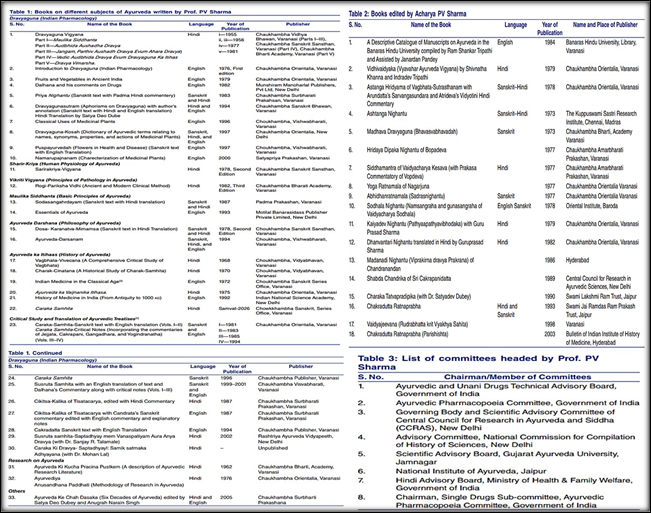
His scientific contributions were commendable and praiseworthy. He has authored and edited over 50 unique books [Tables 1 and 2] and published more than 395 articles and research papers in various reputable journals and magazines. He edited and published various manuscripts such as Dravyaguna by Madhava. The book Ayurveda Ke Chhah Dashaka (Six Decades of Ayurveda), published in 2005, is a collection of lectures and about 500 important articles on different subjects of Ayurveda written during six decades by Acharya PV Sharma (1941–2000 ad), edited by Prof. Satyadev Dubey and Dr. Anugraha Narayan Singh. This work provides a comprehensive understanding of his academic background for future generations, researchers, and workers in this field. Shodashangahridayam, a book written in Arya Chanda with 1000 shloka, was published in 1987, in which he elaborated Ashtanga Ayurveda (eight branches of Ayurveda) further into sixteen specialties, such as Maulik Siddhanta (basic concepts), Sharir Rachana (anatomy), Dravyaguna (Indian pharmacology), Bheshajkalpana (pharmacy), Rasa-shastra (science of mercury and minerals), Svasthavritta (preventive and social medicine), Rasayan (promotive therapy), Vajikarana (aphrodisiac therapy), Roga-Vigyan (pathology and diagnosis of diseases), Kayachikitsa (general medicines), Manasaroga (psychiatry), Prasutitantra (obstetrics), Kaumarbhritya (pediatrics), Agadtantra (toxicology), Shalyatantra (surgery), and Shalakya-tantra (specialty dealing with supraclavicular diseases). The book Charaka Samajna, published in 1996, was another notable work by him. The work aimed to edit and rearrange the content of Charaka Samhita so that learners could easily comprehend it. Subjects scattered throughout the texts are put together in sequence, and Sthanas and chapters have been reconstructed in the new order.
His contributions have significantly enriched the literature of Dravyaguna Vigyan. The work written in five volumes showcases the specialty in its various dimensions: Volume 1—Maulika Siddhanta (Basic Concepts), Volume II—Audbhida Aushadha Dravya (Vegetable Drugs), Volume III—Jangam, Parthiv Aushadh Dravya Evum Ahara Dravya (Animal Products, Minerals, and Dietetic Substances), Volume IV—Vedic Audbhida Dravya Evum Dravyaguna Ka Itihas (Vedic Plants & History of Dravyaguna), and Volume V—Dravya Vimarsha (Discussion on Drugs) from 1955 to 1981. The third revised edition of the first volume, Dravyaguna Vigyan, was published in 2005 as the Golden Jubilee edition. In its second edition, dozens of new substances such as Goraksh, Rudraksh, and Shakhotak and suspicious substances such as Rasna, Aralu, Murva, and Priyangu have been introduced, among others.In the third part, a description of the animal products, minerals, and food substances is given.By surveying all the available Vedic literature, information regarding Dravya was collected along with their historical perspective and presented in the fourth part. There are two sections in the fifth part of Dravyaguna Vigyan. In the first section, the Dravya of the Brihattrayi and the Dravya of Nighantu are discussed in the second section. In 1976, “Introduction to Dravyaguna” was authored to fulfill the need for an authentic English textbook on Dravyaguna.
Ayurveda ka Vaijnanika Itihasa, published in 1975, was an unprecedented work that presents the scientific history of Ayurveda. He made an effort to bring coherence to the topics that Susruta Samhita and Caraka Samhita seemingly portray as contradictory. The book Ayurveda-Darshanam (Philosophy of Ayurveda), published in 1994, includes four sections: Prameyapada, Pramanapada, Prakritipada, and Vikritipada. Prameyapada addresses the fundamental ideas of Ayurveda and accounts for over half of the book. Pramanapada deals with the investigation and its methods. Prakrtipada addresses the ideas and metaphysical side of health. The final section, Vikrtipada, covers the various facets of illness and treatment methods. He tried to explain Yuktipramana precisely and highlight its unique importance in Ayurvedic medicine.
In his book Ayurvediya Anusandhana Paddhati, he had envisioned a novel research methodology ideal for Ayurveda. Charak ki Dravyagana-Saptadhyayi: Sameekshatmaka Adhyayan was his unpublished work, co-authored with Dr. Mohan Lal Jaiswal.
Awards and Honours:-
He received an award of one lakh rupees from Rama Narayana Vaidya Ayurveda Research Trust. He was an honorary fellow of the French Society of Ethnopharmacology, the Society of Ethnobotanists, India, and the National Academy of Ayurveda, India. He has been awarded by different state governments for his published literature and scientific works. He went abroad to popularize Ayurveda globally. He has chaired and presented several papers at national and international conferences.[15] He was invited to global conferences in France and Germany. He was a member of the Asiatic Society of India, Kolkata, and the Indian National Science Academy, where he worked translating and editing books/manuscripts. He was a member of the central scientific committees of the Government of India
His message to students and faculty of Ayurveda was to adopt a research approach that is in tune with Ayurveda’s basic principles while adopting modern parameters to explain the therapeutic action of the drugs. His life and works epitomized the substantial transformation of the specialty of Dravyaguna. His publications serve as a rich source for future generations of Ayurveda, nurturing faith and interest in Ayurveda. He was the idol of austerity, truth, struggle, forgiveness, kindness, and tenderness.
Acharya PV Sharma left this world for a heavenly abode on May 18, 2007, leaving behind his family and thousands of students worldwide. His hard work, devotion, dedication, and contribution to Ayurveda will be a source of inspiration for generations to come.
Full Paper Link