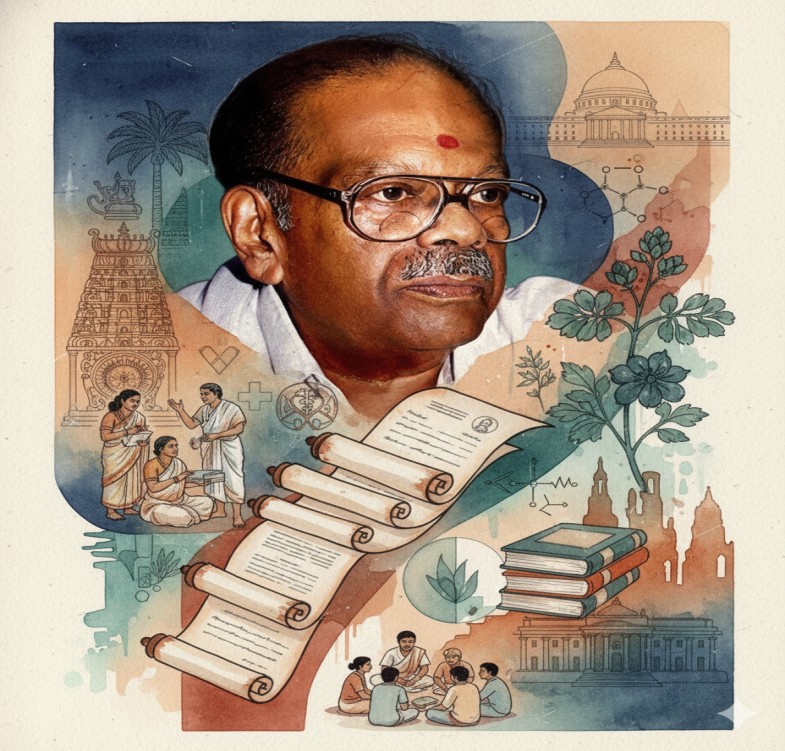
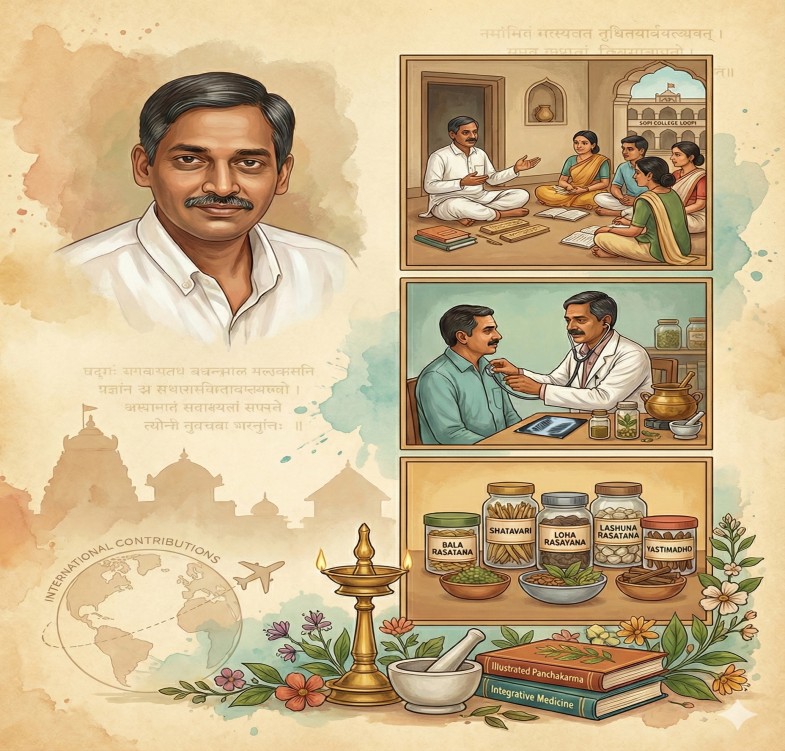

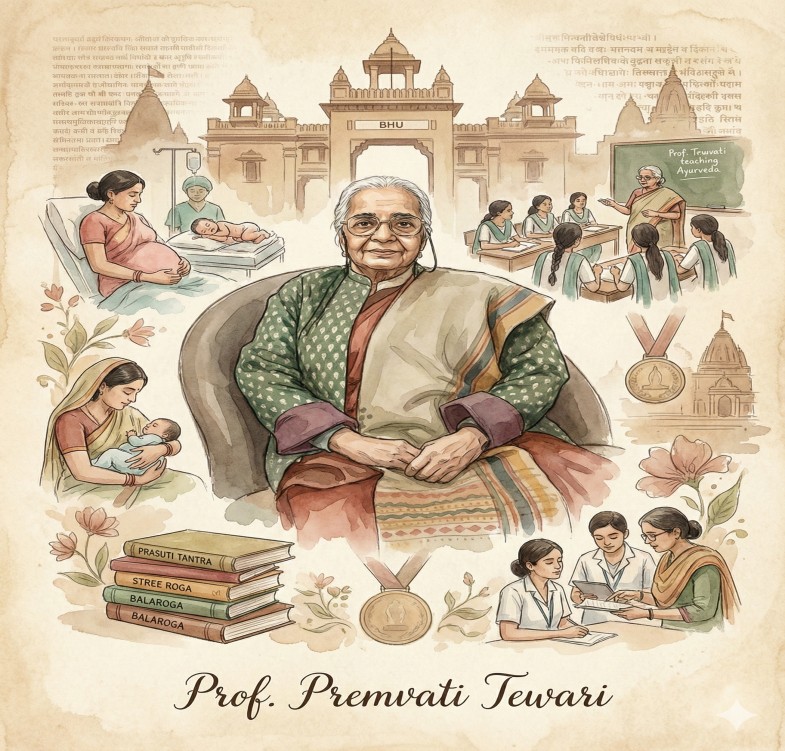
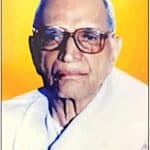
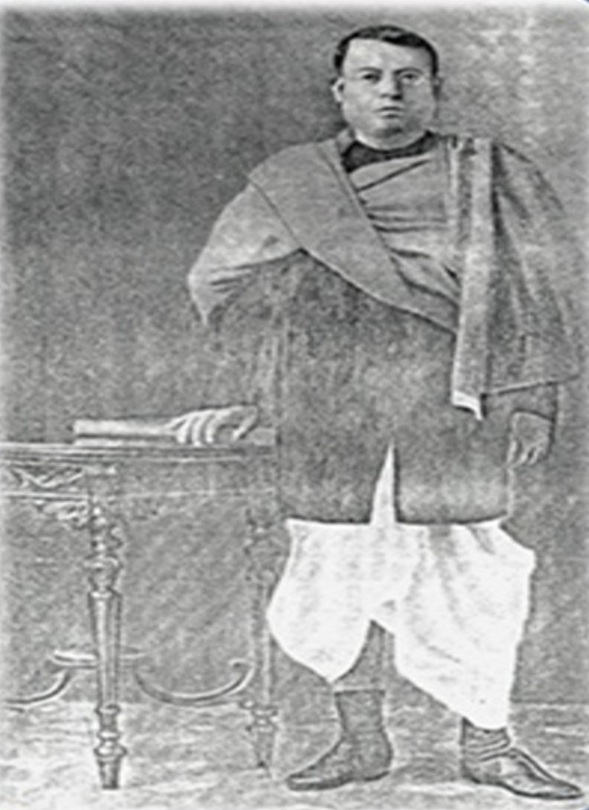
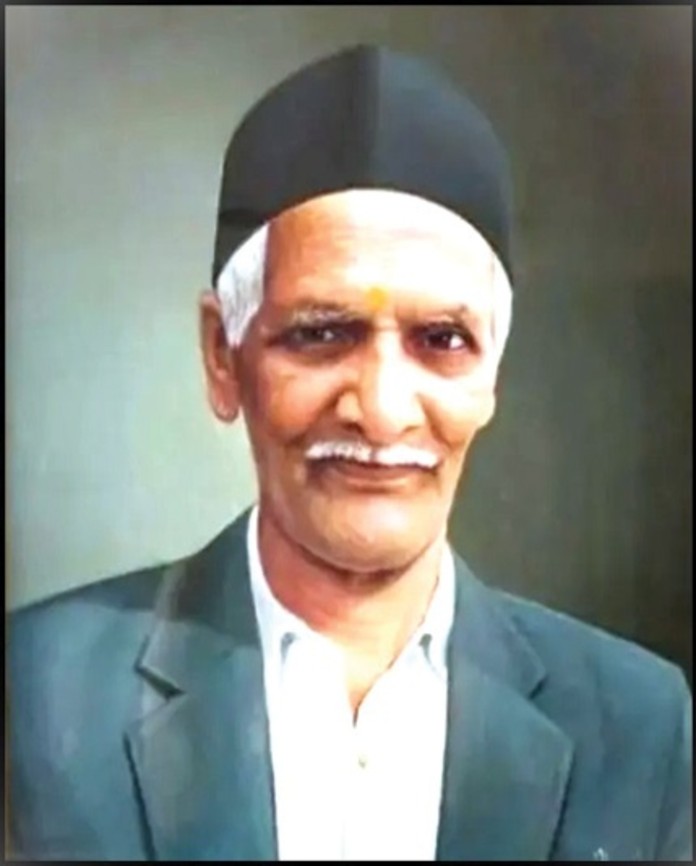
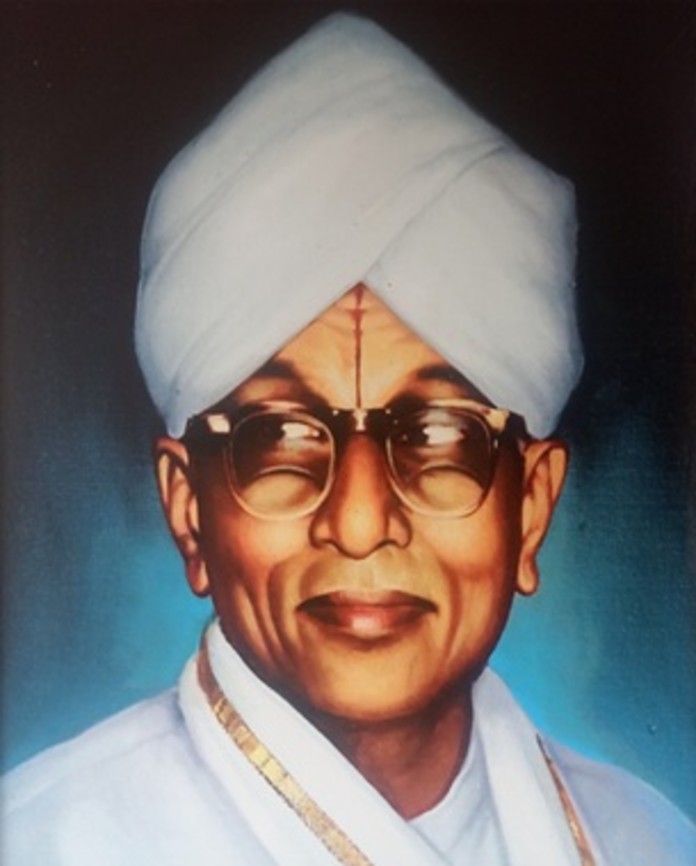
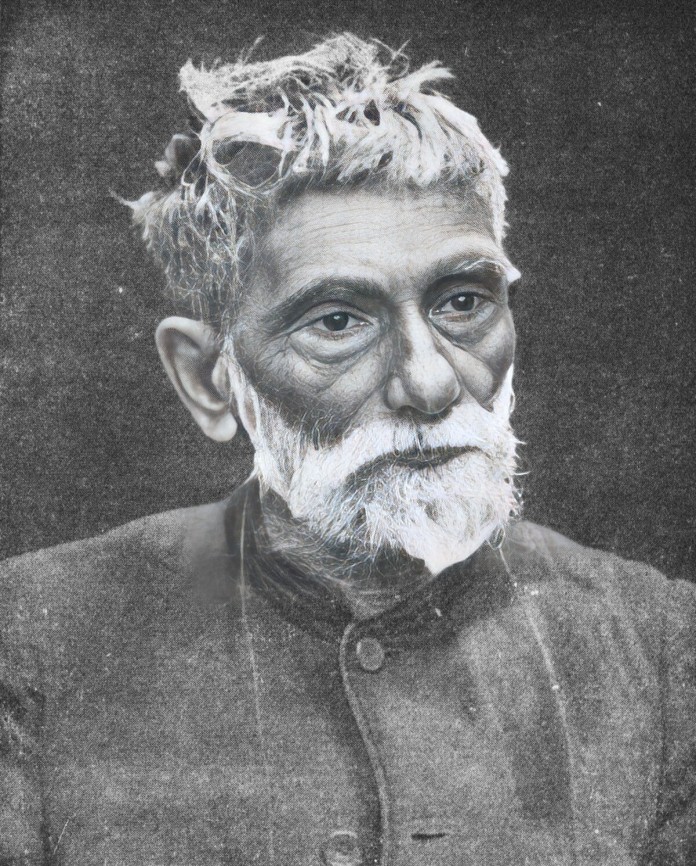
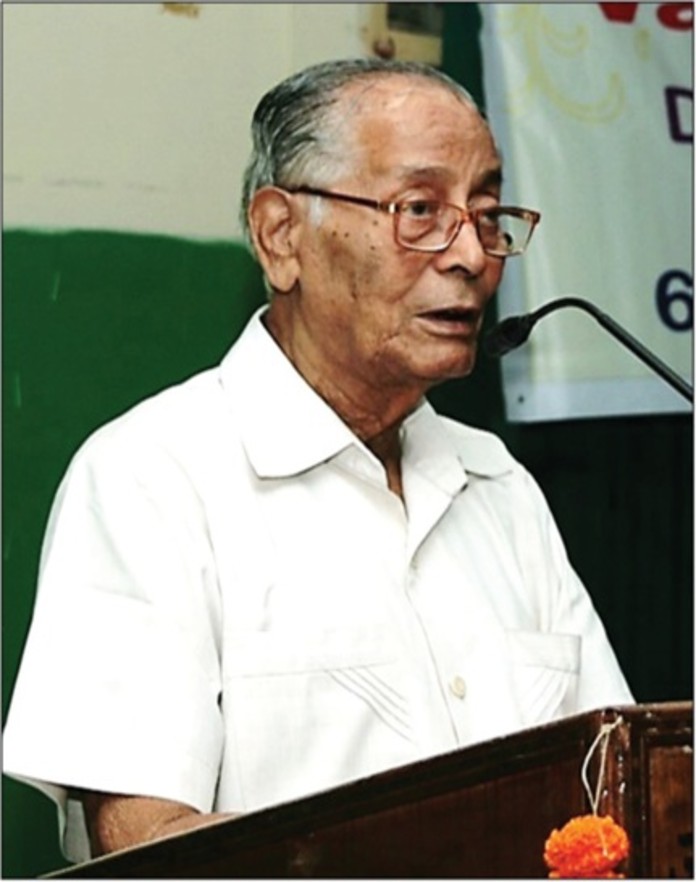
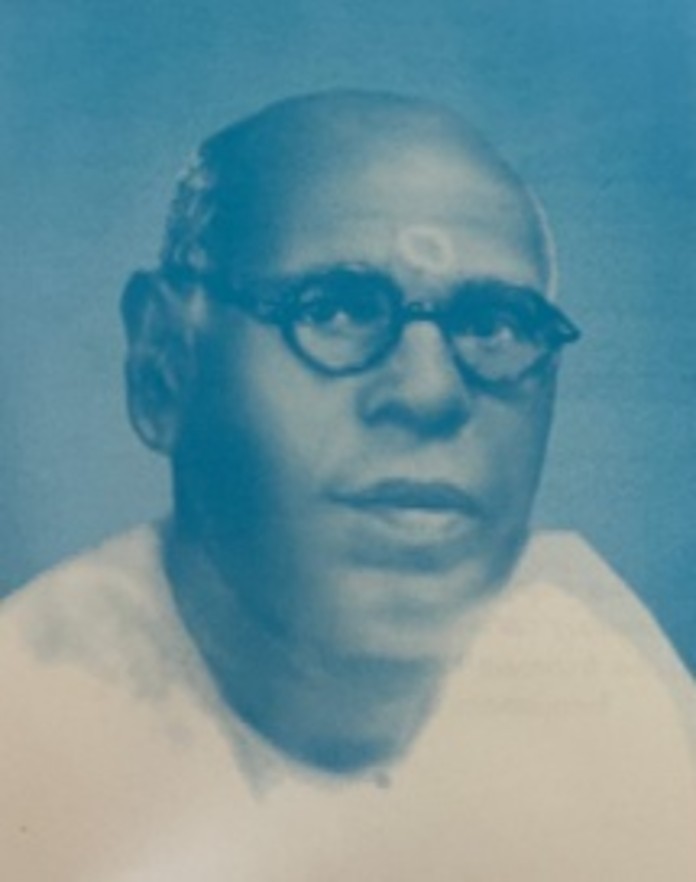
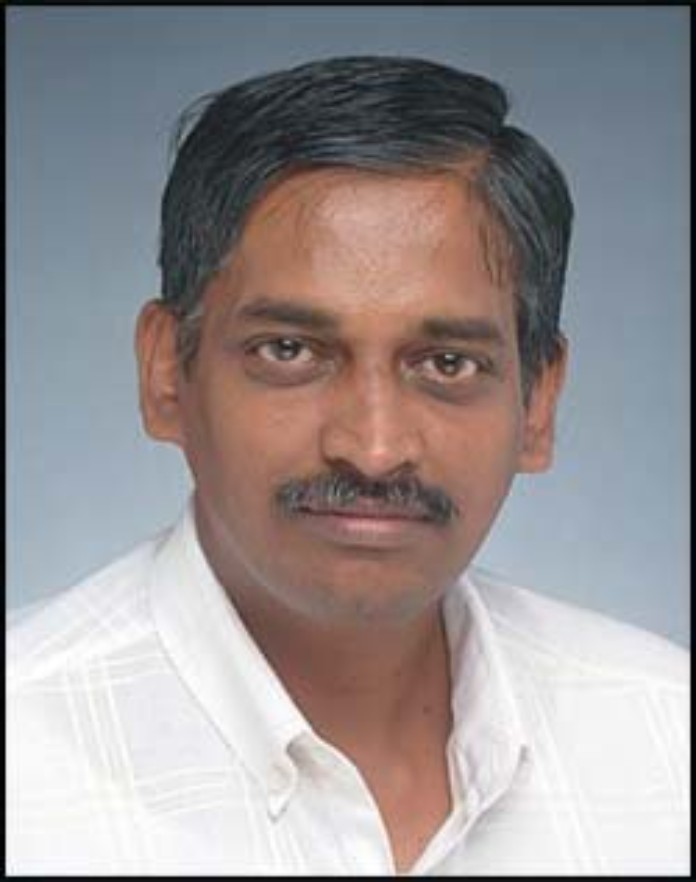
Vaidya Bhagwan Dash
Date of Birth:- October 4th, 1934
Place of Birth:- Parbatipur, in the Biridi Tehsil of the Jagatsinghpur district in Odisha, India.
Details of family:- His father, Yoginath Dash, was a Sanskrit scholar with a keen interest in Ayurveda, and his mother, Shraddha Devi, was a homemaker. Despite his father’s untimely death when Bhagwan Dash was just 4 years old, his father’s love for Sanskrit and Ayurveda greatly influenced him throughout his life. Over the years, Vaidya Bhagwan Dash studied the ancient Indian medical system extensively and established his clinical practice in Delhi.
Vaidya Bhagwan Dash married Veena Dash, a homemaker, in 1979, and they were blessed with two children. Their son, Prashant Dash, was born in 1980, followed by their daughter, Pratima Das, in 1981, Both children followed in his footsteps and pursued medical careers. Dr. Prashant is a specialist in internal medicine and currently heads a medical association, while Dr. Pratima completed her education at the Kolhapur Medical College and specialized in gynecology. Despite their training in different medical sciences, Prashant and Pratima are dedicated followers of Ayurveda and integrate its principles into their respective fields and daily lives.
Educational Qualifications:-
He completed his early education/primary education in a government school in his hometown, Parbatipur, Odisha. After completing his intermediate education, Vaidya Bhagwan Dash pursued his passion for Ayurveda by obtaining a Degree in Ayurvedic Medicine & Surgery from the Government Ayurvedic College, Puri, Odisha, in 1955-Later, he pursued his postgraduate qualification, Higher Proficiency in Ayurveda, from the Post Graduate Training Centre in Ayurveda, Jamnagar, Gujarat, in 1958.
Furthermore, he earned a bachelor’s degree in arts from the Tribhuvan University in Kathmandu, Nepal, in 1969, Later, in 1973, he pursued his master’s degree in Sanskrit from the Delhi University. He furthered his education by earning his Doctor of Philosophy, in Tibetan Medicine from Delhi University in 1978. In 2011, he received an honorary degree of Doctor of Science from the Utkal University, Bhubaneswar, Odisha.
Professional details:-
As a researcher: He began his professional career in Ayurveda as a Junior Research Physician at the S.M.S. Medical College in Baroda, Gujarat India. In 1960. He quickly gained recognition for his contributions to the field, which led to him being offered several positions in the Ministry of Health and Family Welfare Government of India, including Research Officer (Avurveda) and Senior Research Officer (Avurveda). In these roles. He has played an instrumental role in developing and promoting &Ayurveda in India and beyond. One of his most significant contributions was directing several pharmacies to formulate numerous medicines.
As an author:- Throughout his career. Vaidya Bhagwan Dash authored numerous books, manual and monographs on Ayurveda and Tibetan medicine. Many of these works have been translated into multiple languages and have become essential resources for practitioners and scholars worldwide. As a result of his significant contributions, he has been widely recognized and invited to speak at various international conferences and seminars on Ayurveda.
Details of publications in the field of Ayurveda
| Details of publications in the field of Ayurveda | Year of publication |
|---|---|
| Concepts of Agni in Ayurveda with special reference to Agni-Bala-Parksa, Chowkhamba Sanskrit Series Office, Varanasi | 1971 |
| Charaka Samhita with English translation and critical notes based on Cakrapani’s Ayurveda Dipika, Volume I, Chowkhamba Sanskrit Series Office, Varanasi | 1976 |
| Charaka Samhita with English translation and critical notes based on Cakrapani’s Ayurveda Dipika, Volume II, Chowkhamba Sanskrit Series Office, Varanasi | 1977 |
| Charaka Samhita with English translation and critical notes based on Cakrapani’s Ayurveda Dipika, Volume III, Chowkhamba Sanskrit Series Office, Varanasi | 1988 |
| Charaka Samhita with English translation and critical notes based on Cakrapani’s Ayurveda Dipika, Volume IV, Chowkhamba Sanskrit Series Office, Varanasi | 1997 |
| Charaka Samhita with English translation and critical notes based on Cakrapani’s Ayurveda Dipika, Volume V, Chowkhamba Sanskrit Series Office, Varanasi | 1999 |
| Charaka Samhita with English translation and critical notes based on Cakrapani’s Ayurveda Dipika, Volume VI, Chowkhamba Sanskrit Series Office, Varanasi | 2001 |
| Charaka Samhita with anvaya, transliteration, annotation along with English equivalents, translation and commentary in English based on Cakrapani’s Ayurveda Dipika; Volume I, Indian Book Centre, New Delhi | 1999 |
| Materia Medica of Ayurveda, based on Ayurveda Saukhya of Toderananda, Concept Publishing Co, New Delhi | 1980 |
| Basic Principles of Ayurveda, based on Ayurveda Saukhya of Toderananda, Concept Publishing Co, New Delhi | 1980 |
AYURVEDIC WORK TRANSLATED INTO FOREIGN LANGUAGES
| Name of the book | Year of publication |
|---|---|
| Manual di Ayurveda: La Medicina Tradizionale Indiana (in Italian), Edizioni Mediterranee, Rome, Italy | 1985 |
| Handbook of Ayurveda (in Japanese), Hirakawa Suppan, Tokyo, Japan | 1990 |
| Alchimia e uso terapeutico dei metallic nell’ Ayurveda: L’uso e l’efficacia di metalli, minerali, gemme e prodotti naturali (in Italian), Edizioni Mediterranee, Rome, Italy | 1997 |
| Fundamentos da medicina Ayurvedica (in Portugese), Editora Chakpori, Brasil | 1998 |
| Rimedi Ayurvedici per la famiglia (in Italian), Editrice Lunaris, Viareggio, Italy | 1994 |
| Rimedi Ayurvedici per malattie comuni (in Italian), Edizioni Mediterranee, Rome, Italy | 1999 |
| Ayurveda per la madre e il bambino (in Italian), Edizioni Mediterranee, Rome, Italy | 2000 |
| Ayurveda la mene it enfani (in French), Adi Shakti, Normady, France | 2006 |
Full Paper Link